

Best Practices for ERP Reporting: A CFO's Playbook for Mid-Sized Indian Companies
By BiPivot Team · 3 September 2026
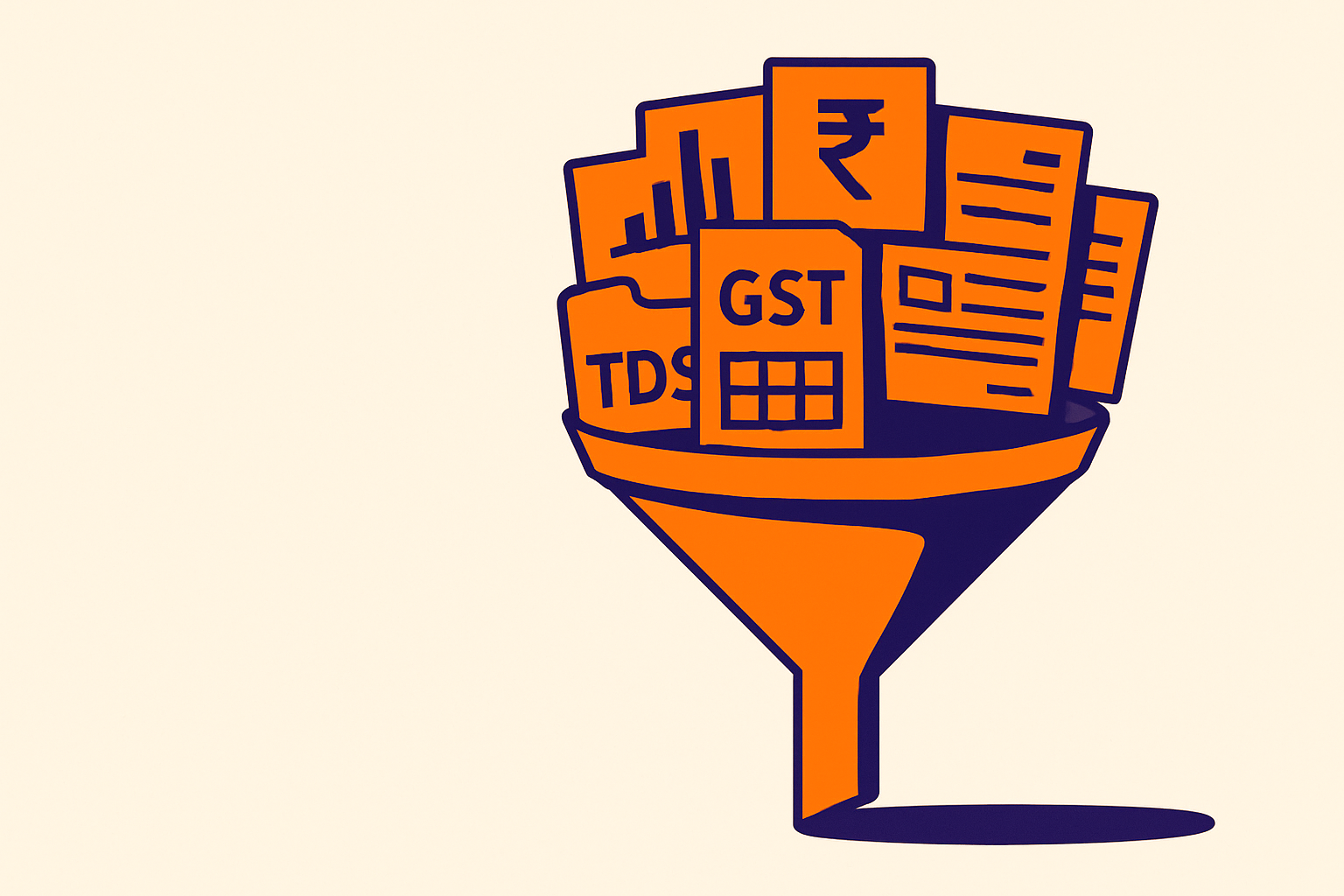
Most mid-sized Indian companies don't have a reporting problem because their ERP is weak. They have one because nobody decided, on purpose, what "good reporting" means for their business. The system dutifully spits out whatever it's configured to spit out — and finance teams spend three days every month wrestling it into something the CFO can actually present to the board.
I've sat across the table from enough finance heads in Pune, Ahmedabad, and Coimbatore to know the pattern: the ERP was bought two or three years ago, GST and TDS modules were switched on because the vendor recommended it, and reporting has been "good enough" ever since. Nobody has asked whether it's good enough for where the company is now — ₹150 crore in revenue, three states, a new product line, and a board that wants weekly cash visibility, not a quarterly PDF.
This article is about closing that gap. Not the theory of ERP reporting, but the specific decisions that separate finance teams who trust their numbers from those still reconciling in Excel at 11 pm.
Why does ERP reporting matter more for Indian CFOs than global templates suggest?
Because the compliance surface here is unusually dense, and unusually mobile. GST rates get revised, e-invoicing thresholds get lowered, TDS sections multiply, and MCA filing formats change — sometimes mid-year. A reporting stack built for a US or European playbook simply doesn't carry the localization weight an Indian finance team needs.
Concretely, an Indian mid-market ERP setup needs to natively handle:
- GST: multi-state GSTIN reporting, e-invoicing generation and IRN reconciliation, GSTR-1/3B auto-population, and ITC matching against GSTR-2B.
- TDS: automated computation across sections, challan generation (ITNS 281), and quarterly return filing for 24Q, 26Q and 27Q, with Form 16/16A generated without a manual template.
- MCA/ROC: tracking of annual filings — DIR-3 KYC, MGT-7, AOC-4 — with audit trails that show who approved what and when.
According to industry analysis, robust GST compliance, e-invoicing, and multi-state statutory reporting aren't nice-to-haves for Indian ERP deployments — they're non-negotiable for ERP success in India. ERP software that handles TDS well doesn't just calculate the number — it should generate challans, file 24Q/26Q/27Q returns, and produce Form 16/16A certificates without a separate CA-managed spreadsheet running in parallel, as detailed by ERPCA's review of tax automation. Similarly, ROC compliance modules that track DIR-3, MGT-7 and AOC-4 filings with proper audit trails save a finance head from the annual scramble every September.
The market is moving fast enough that standing still is itself a risk. The India ERP software market was valued at roughly USD 4,500 million in 2024 and is projected to reach USD 12,000 million by 2035, growing at a 9.3% CAGR according to Market Research Future, while Mordor Intelligence pegs the broader ERP market at USD 1.07 billion in 2025, rising to USD 2.62 billion by 2031 at a 16.08% CAGR — with SMEs the fastest-growing segment at 19.2% CAGR. Finance and accounting alone made up 29.45% of that market in 2025. Vendors are building for exactly the problem you have; the question is whether you're extracting that value or leaving it on the table.
What separates strategic ERP reporting from a glorified compliance checklist?
Here's the trap: many finance teams treat ERP reporting as a compliance exercise — get GSTR-3B filed, get TDS challans paid, close the books. That's necessary, but it's the floor, not the ceiling.
Modern ERP systems function as strategic intelligence layers, not just transaction processors — they strengthen organizational resilience, compliance readiness, and competitive positioning in dynamic markets like India, per Embee Software's analysis. The distinction matters practically. A compliance-only ERP tells you GST liability for the month. A strategically configured ERP tells you which distributor's delayed payments are dragging your working capital, which SKU's margin has quietly eroded by 4% over two quarters, and whether your Karnataka warehouse is becoming a cash trap.
Consider a mid-sized auto components manufacturer that was closing its books in 11 working days every month because sales data, inventory, and payroll systems were fragmented, requiring manual consolidation. After integrating these into a single ERP reporting layer with automated data feeds, the company experienced a significant reduction in close time. This aligns with what integrated ERP adoption typically delivers: organizations using integrated systems cut month-end close time by an average of 30% and lift finance team productivity by up to 40%, according to Priority Software's CFO research. Such efficiency gains allow CFOs to present financials much earlier, providing a crucial advantage for timely board decisions on capital expenditure.

This is the same principle we've written about in the context of shop-floor operations — see our guide on finance automation for manufacturing companies, which focuses on margin visibility and compliance on the production side. ERP reporting best practices are the reverse angle: how you structure the reporting layer itself so that operational data becomes decision-ready, not just audit-ready.
How do you fix the data quality problem before it fixes your reporting for you?
Every CFO I've worked with underestimates this until it bites. Duplicate vendor masters, three different spellings of the same customer name, GST numbers entered with a typo — these aren't cosmetic issues. They're the reason your ITC claim doesn't match your books, or your AR ageing report shows a customer as both current and 90-days overdue under two different ledger codes.
Poor data quality — duplicate records, inconsistent master data — is one of the most persistent challenges in ERP integration and directly causes reporting errors and operational disruption, as CTND's ERP integration review notes. The financial scale of this is not trivial: poor data quality costs organizations an average of $12.9 million annually across industries, driven by downstream decision errors, compliance exposure, and operational rework, per QuickBooks' ERP data analysis guide. For a mid-sized Indian company, scale that down proportionally and you're still looking at lakhs of rupees in wasted reconciliation hours, missed early-payment discounts, and — worse — GST notices triggered by mismatched vendor data.
A practical data-quality checklist that actually gets used (not just written and filed):
- Single source of truth for master data. One vendor master, one customer master, one chart of accounts — owned by finance, not by whichever department onboarded the vendor first.
- Mandatory field validation at entry. GSTIN, PAN, and bank account fields should be format-validated at the point of data entry, not caught during month-end reconciliation.
- Monthly duplicate-record audit. A 20-minute scan, run by a junior finance executive, catches most duplication before it compounds.
- Vendor GSTIN cross-check against GSTR-2B, not manual comparison. This is the single highest-leverage check for protecting input tax credit — a topic we've covered in depth in our guide on GST reconciliation using AI, which goes deeper into automating the 2A/2B matching process than we will here.
- Quarterly access review. Who can create a new vendor master? If the answer is "anyone in procurement," you have a control gap, not just a data gap.
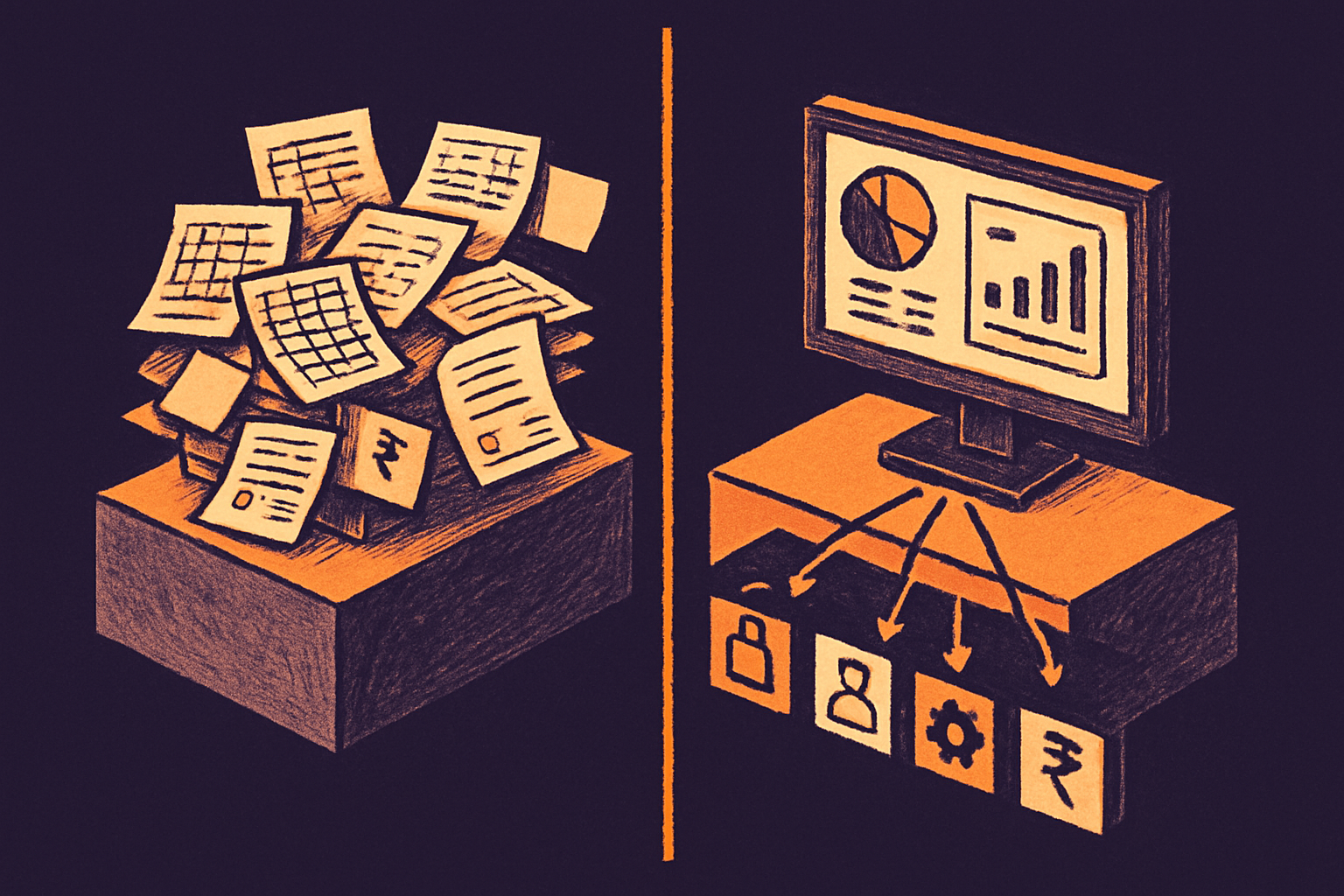
A well-integrated ERP connects expense management, procurement, payroll, CRM, and tax reporting into a single, auditable system of record — which is precisely what reduces the manual reconciliation and data delays that create these quality problems in the first place, per Alaan's ERP integration playbook. If your procurement team's PO data and your finance team's invoice data live in different systems that don't talk to each other, you're not doing ERP reporting — you're doing spreadsheet reporting with extra software licenses.
What does real-time reporting actually change about how you run cash flow?
This is where the ROI conversation gets concrete for a CFO. Real-time data reporting isn't a nice dashboard feature — it's what lets you manage cash proactively instead of reactively. Real-time visibility is essential for CFOs to manage cash flow, optimize working capital, and make timely investment decisions, moving away from reactive decisions based on stale, month-old information, as Smart Solutions International's analysis of real-time accounting puts it.
Consider a mid-sized FMCG distributor that managed its cash position through weekly manual Excel refreshes from multiple ledgers. In a hypothetical scenario, a significant distributor default on receivables might not be flagged until a week-end report, potentially after the company has already committed to substantial purchases based on an inaccurate cash position. With real-time ERP dashboards pulling live AR ageing and bank position, such critical financial gaps could be identified within a day, allowing the CFO to proactively manage commitments or negotiate alternative arrangements.
We've explored the FMCG-specific version of this margin-and-distributor problem in our article on finance automation for FMCG companies — that piece focuses on distributor chaos and margin leakage specifically; this article's angle is the reporting infrastructure that makes real-time visibility possible in the first place, regardless of sector.
ERP centralizes data from sales, supply chain, HR, and manufacturing into one platform, eliminating silos and giving CFOs instant clarity rather than a patchwork of departmental reports that arrive on different days with different assumptions baked in, per Scrubbed's analysis of ERP as a strategic advantage for CFOs. The practical test: can your CFO pull today's consolidated cash position, across all bank accounts and all business units, in under five minutes, without calling anyone? If the answer is no, your ERP reporting isn't real-time — it's just digitized.
What are the actual implementation pain points, and how do you plan around them?
No honest article on ERP reporting skips this. Implementation is genuinely hard, and pretending otherwise sets finance teams up for disappointment six months in.
The recurring pain points for mid-sized companies are well-documented: implementation complexity, cost overruns, integration friction with legacy systems, and employee resistance to changing how they've always worked, as Sageroots' review of mid-market ERP challenges lays out. I'd add a fifth, India-specific one: underestimating how much configuration work GST and TDS localization actually needs beyond the vendor's demo.
A realistic implementation sequencing for a ₹50-200 crore revenue company:
- Month 1-2: Master data cleanup (see the checklist above) — do this before migration, not during. Migrating dirty data into a new system just gives you dirty data with a better UI.
- Month 3-4: Core financial module go-live — GL, AP, AR — running in parallel with the legacy system for one full close cycle before cutover.
- Month 5: GST and TDS module activation, tested against at least one live filing cycle before trusting it fully.
- Month 6: Reporting layer and dashboards — this is where CFOs often want to start, but building dashboards on unstable underlying data just produces confident-looking wrong numbers.
On resistance to change: the single highest-leverage fix isn't more training sessions, it's writing down the process so clearly that people can't default back to the old spreadsheet habit. We've written a detailed guide on this exact problem — how to build SOPs that employees actually follow — which is worth pairing with any ERP rollout plan, because the system change and the process change need to land together or neither sticks.
Cost overruns are real but manageable if scoped honestly upfront. A common mistake: budgeting for software licenses and implementation but not for the internal time cost — a mid-sized company's finance team typically spends 15-20% of its bandwidth over a 6-month rollout just on data validation and UAT, and that has to be planned for, not absorbed as a surprise.
Should you go cloud, and what does that mean for your reporting stack?
For most mid-sized Indian companies today, the cloud-versus-on-premise debate is largely settled. Cloud ERP solutions offer flexibility, scalability, and affordability, and India saw 41% year-on-year growth in cloud ERP adoption in 2025 — one of the highest rates in the Asia-Pacific region, according to SaaSWorx's 2026 ERP market outlook. Globally, cloud ERP now accounts for 70% of all new implementations, per the same source — the on-premise-first default is no longer the safe choice; it's increasingly the exception.
For reporting specifically, cloud ERP matters because it typically ships with more current India localization — GST rate changes and e-invoicing threshold updates get pushed centrally rather than requiring a consultant visit to patch an on-premise instance. If your current system requires a paid change request every time the GST Council revises a rate slab, that's a structural drag on your reporting accuracy, not a one-off inconvenience.
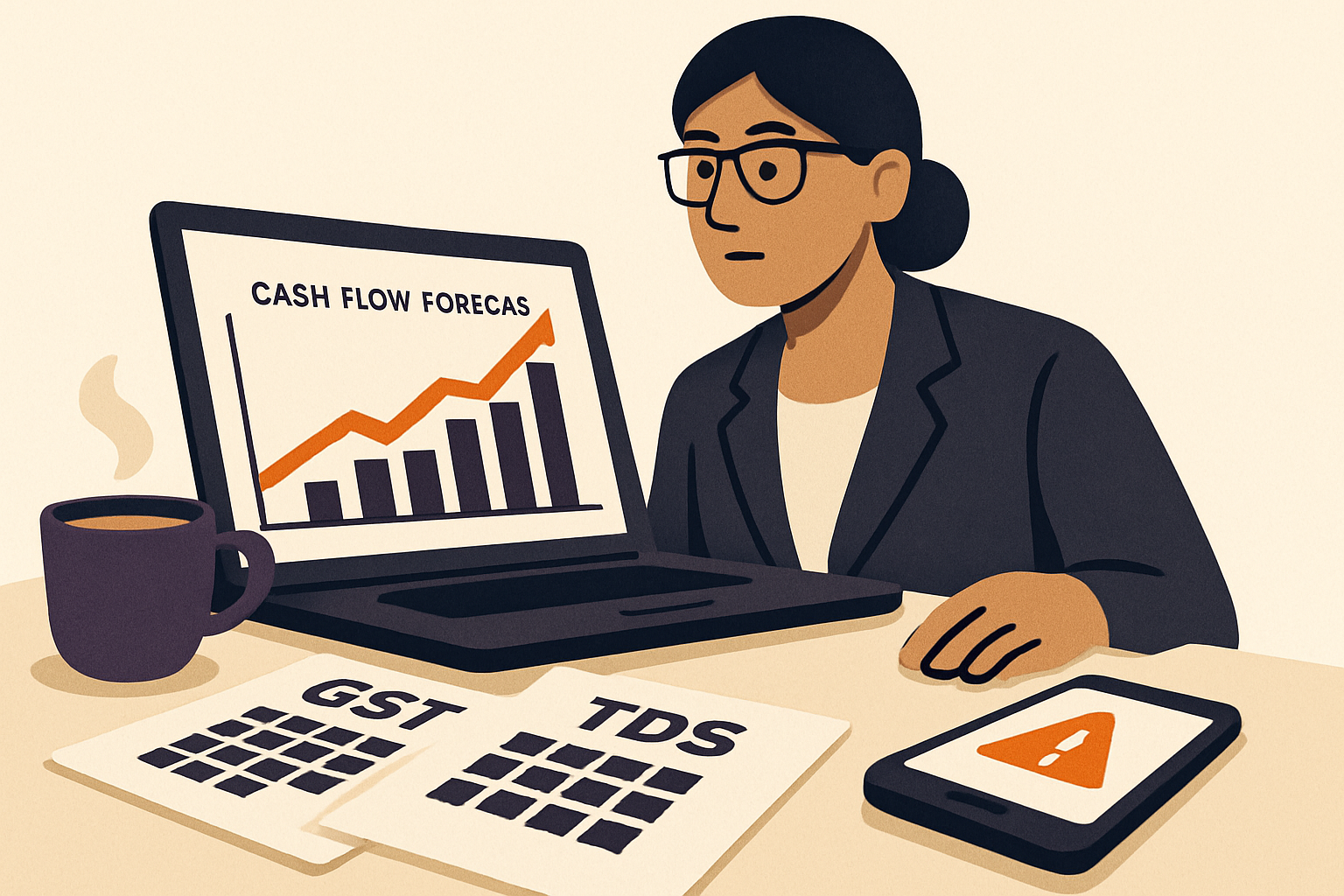
That said, cloud isn't a silver bullet for governance. Who has admin rights to modify approval workflows? Who can override a three-way match on a purchase order? These questions matter more, not less, once your system is accessible from anywhere. For a broader view of how AI and cloud infrastructure change the control environment finance teams need to build, our piece on governance in the age of AI is a useful companion read — it covers the oversight structures that should sit around any cloud ERP deployment, not just the reporting outputs.
What does the cost of doing nothing actually look like?
This is the argument that gets a hesitant board to approve budget. Fragmented systems and poor ERP reporting don't just create inconvenience — they create quantifiable losses.
Consider ITC leakage: if your invoice matching against GSTR-2B is manual and monthly rather than automated and continuous, mismatches routinely slip through — vendors who file late, invoices with typo'd GSTINs, credit notes that never get reconciled. We've quantified this exposure in detail in our article on invoice matching automation and protecting ITC; the short version is that a mid-sized company can plausibly be leaking significant amounts in unclaimed or delayed ITC purely from reconciliation gaps that better ERP reporting would catch automatically.
Then there's the decision-latency cost, which is harder to put a number on but arguably larger. A CFO working off a report that's two weeks stale is making pricing, hiring, and capex decisions on outdated assumptions. In a market where GST rules and input costs shift quarter to quarter, that lag compounds. And there's the audit and penalty exposure from late or inaccurate MCA filings, GST mismatches, and TDS short-deduction — each individually might be a manageable fine, but collectively they signal to lenders and investors that your financial controls aren't tight, which shows up eventually in your cost of capital.
The related discipline here is internal controls — ERP reporting is only as trustworthy as the control environment behind it. If you haven't recently reviewed whether your approval matrices, segregation of duties, and audit trails actually match how your company operates today, our guide on internal financial controls for mid-sized Indian companies is the right next read.
How BiPivot helps
BiPivot works with finance teams at mid-sized Indian companies to turn ERP data into reporting that's actually usable at the board table — cleaning up master data, automating GST/TDS/MCA workflows, and building the real-time visibility CFOs need for proactive decisions rather than reactive fire-fighting. If your ERP reporting still involves manual reconciliation and a scramble at month-end, visit bipivot.com to talk through what a tighter setup could look like for your business.