

Purchase Order to Payment Automation: A CFO's Guide to Compliance-First P2P in India
By BiPivot Team · 3 August 2026
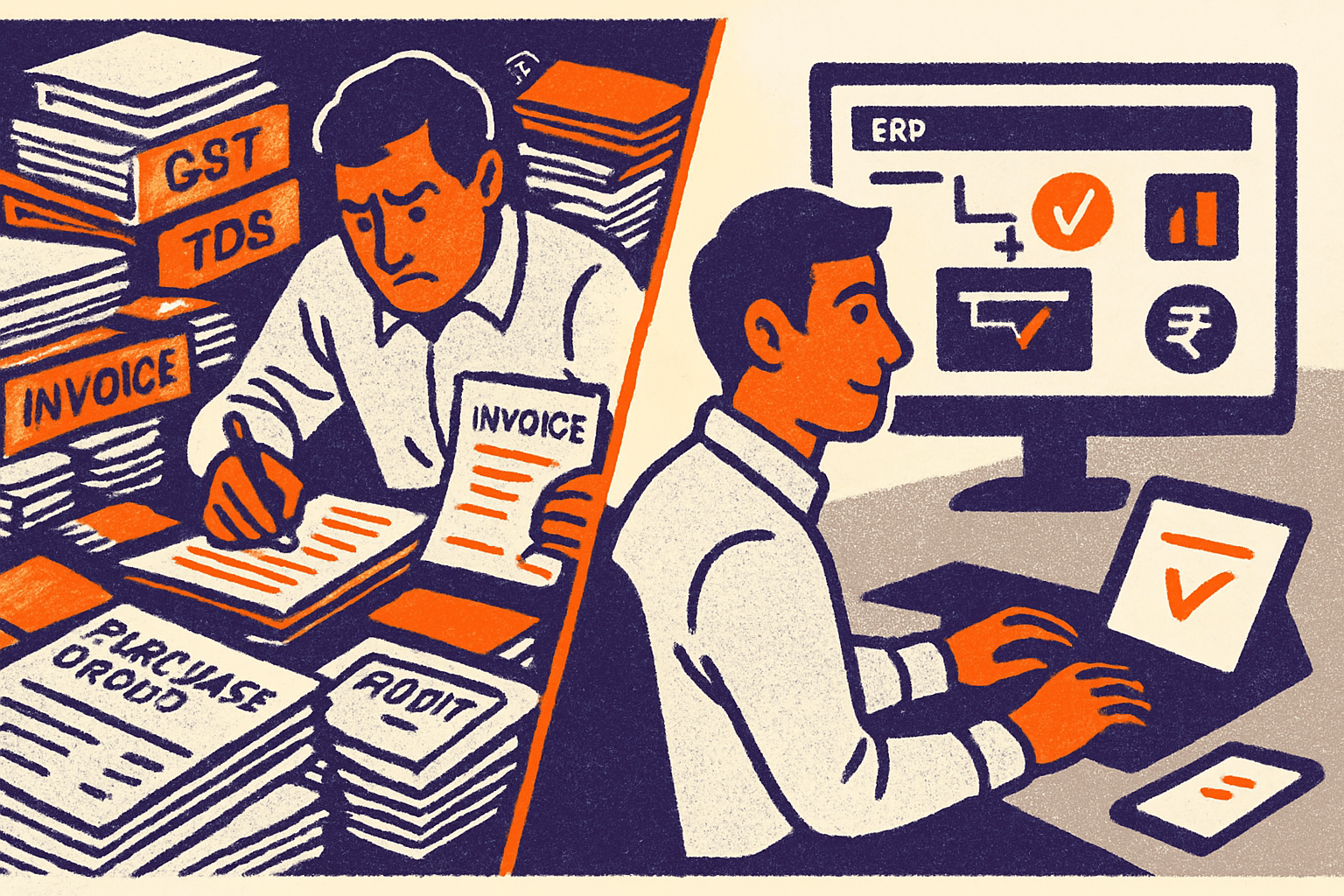
Every mid-sized Indian company has a version of the same story: a purchase order raised in one ERP, a goods receipt note scribbled at the plant gate, a service entry sheet emailed as a PDF, and an invoice that lands in the AP inbox three weeks later demanding a signature nobody remembers giving. By the time someone reconciles all of it against GSTR-2B, the payment is late, the vendor is annoyed, and the Input Tax Credit is either delayed or lost. This isn't a productivity problem. It's a working capital and compliance problem wearing a productivity costume.
Why is the Purchase-to-Payment (P2P) cycle so broken in Indian mid-sized companies?
The Procure-to-Pay (P2P) cycle in India runs from purchase requisition to vendor payment, and unlike in many Western markets, it must simultaneously satisfy GST controls — e-invoicing, e-way bills, and Input Tax Credit reconciliation — at every step, not just at month-end (ValueDX). That dual mandate — operational accuracy plus real-time tax compliance — is where most mid-sized companies quietly bleed money.
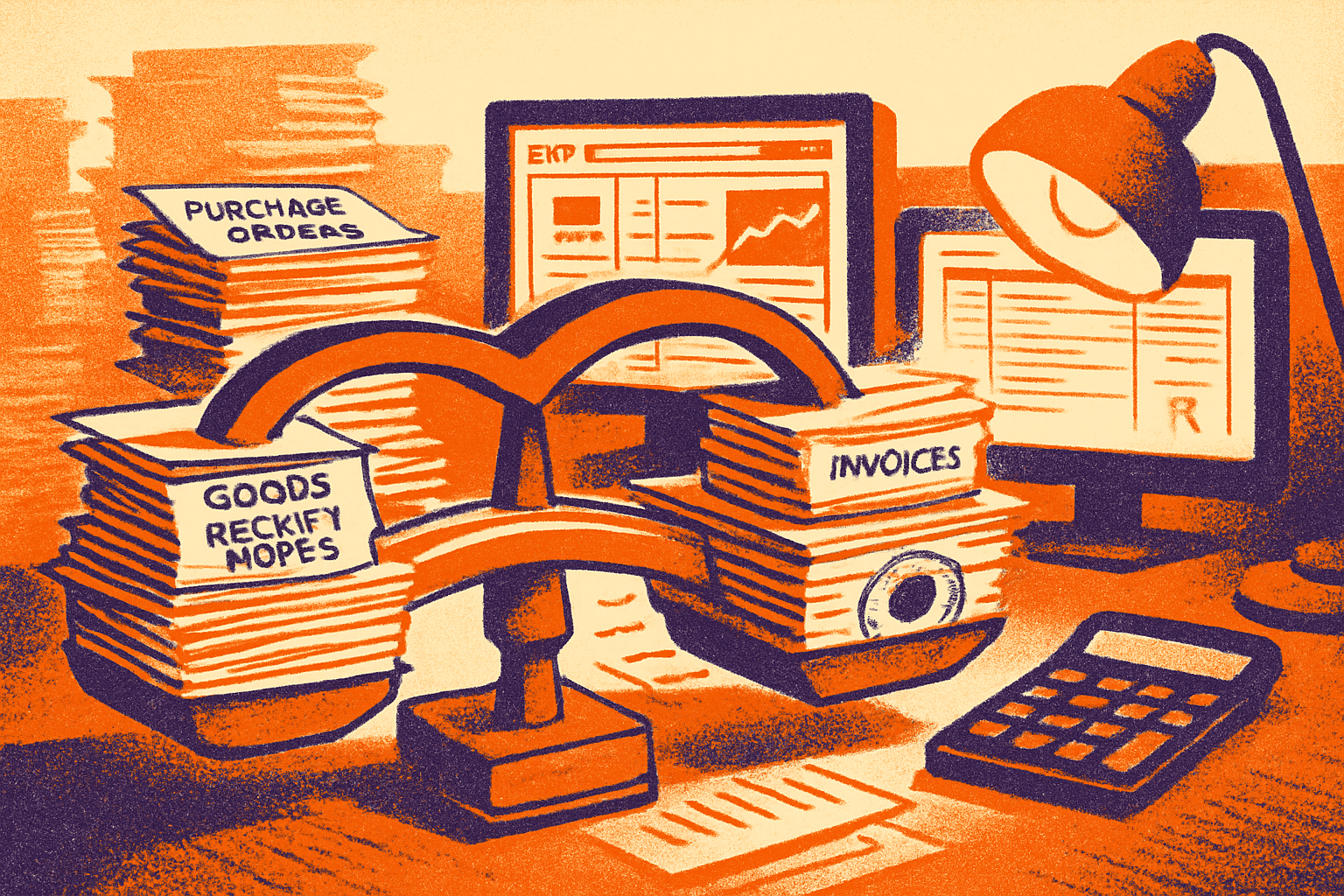
- Multiple ERPs, one vendor. A company with a Pune plant on SAP and a Chennai depot on Tally ends up reconciling the same vendor twice, manually, in Excel.
- Hybrid documentation. POs, GRNs, service entry sheets, gate entries, and challans move between physical and digital formats, creating handoffs where data quietly changes or disappears (ValueDX).
- Low PO coverage. Indirect and services procurement — AMC contracts, consulting, logistics — routinely gets bought without a PO at all, leading to non-standardized buying and a flood of exceptions when the invoice finally arrives (ValueDX).
- Bad vendor master data. Wrong PAN, wrong GSTIN, wrong TDS section mapped against a vendor — each one is a landmine that surfaces only when a payment gets stuck or an ITC claim gets rejected (ValueDX).
The cost of tolerating this is measurable, not anecdotal. Manually processing a single invoice in India costs roughly ₹750–₹1,600 ($9–$20), while automation brings that down to under ₹150 ($1.80) (Binary Semantics). For a company processing 4,000 invoices a month, that's the difference between spending ₹40–48 lakh and spending under ₹6 lakh — a saving of roughly ₹35–42 lakh a month, or over ₹4 crore annually, purely on processing cost, before you even count late-payment penalties or lost ITC.
Cycle time tells the same story. The average manual invoice cycle in India runs 9.2 days; best-in-class automated teams close it in 3.1 days (Binary Semantics). That's a six-day swing on every single invoice — multiplied across thousands of invoices, it directly determines whether you're capturing early-payment discounts or paying interest on stretched credit lines.
How do GST and TDS regulations turn every invoice into a compliance event in India?
This is the part most P2P conversations skip. In India, an invoice isn't just an AP document — it's a tax event with two separate compliance clocks running simultaneously.
-
Clock one: TDS. Under Sections 194C, 194J, and related provisions, the correct TDS rate depends entirely on how a vendor is classified — contractor versus professional services versus commission agent. Misclassify a vendor once, and you don't just owe interest; the entire expense can be disallowed under Section 40(a)(ia), turning a small AP error into a full-blown tax exposure (Mynd Solutions). A ₹12 lakh consulting invoice processed under the wrong section isn't a rounding error — it's a potential ₹3.6 lakh-plus disallowance at 30% corporate tax plus interest.
-
Clock two: GST and e-invoicing. E-invoicing is now mandatory for businesses above ₹5 crore Annual Aggregate Turnover, and from April 1, 2026, businesses above ₹10 crore AATO face a strict 30-day window to report e-invoices, after which the portal simply won't accept them (QX Global Group). Miss that window on a genuine transaction and you lose the ability to generate a valid e-invoice for it — which cascades into ITC denial for your buyer and a credibility problem for you as a supplier.
Then there's the reconciliation that determines whether the GST you've paid on purchases actually comes back to you. Automated systems compare the internal purchase register against the GSTR-2B statement pulled from the GST portal, flagging eligible, mismatched, or missing credits before the filing deadline (Binary Semantics). Do this manually across 300–400 vendor invoices a month, and you will miss mismatches — not because your team is careless, but because line-by-line reconciliation against a portal statement is exactly the kind of task humans are bad at and machines are built for.
Worked example: a ₹40 crore-turnover manufacturer with roughly ₹6 crore in monthly GST-bearing purchases typically sees 3–5% of ITC claims stuck in mismatch status every month because a vendor filed late, quoted the wrong invoice number, or reported a different taxable value. That's ₹18–30 lakh of working capital sitting in limbo every single month — not lost forever, but blocked, until someone manually chases it down. Automated 2B reconciliation catches these within days of the statement being generated, not during the annual audit scramble.
What does a fully automated P2P workflow actually look like?
- Requisition and PO creation. Every purchase, including indirect and services spend, gets a PO. This alone fixes the low-PO-coverage problem that causes most invoice exceptions in the first place (ValueDX).
- Goods/service receipt capture. GRNs, service entry sheets, gate entries, and challans are captured digitally at the point of receipt — no more paper challans sitting in a plant office for a week.
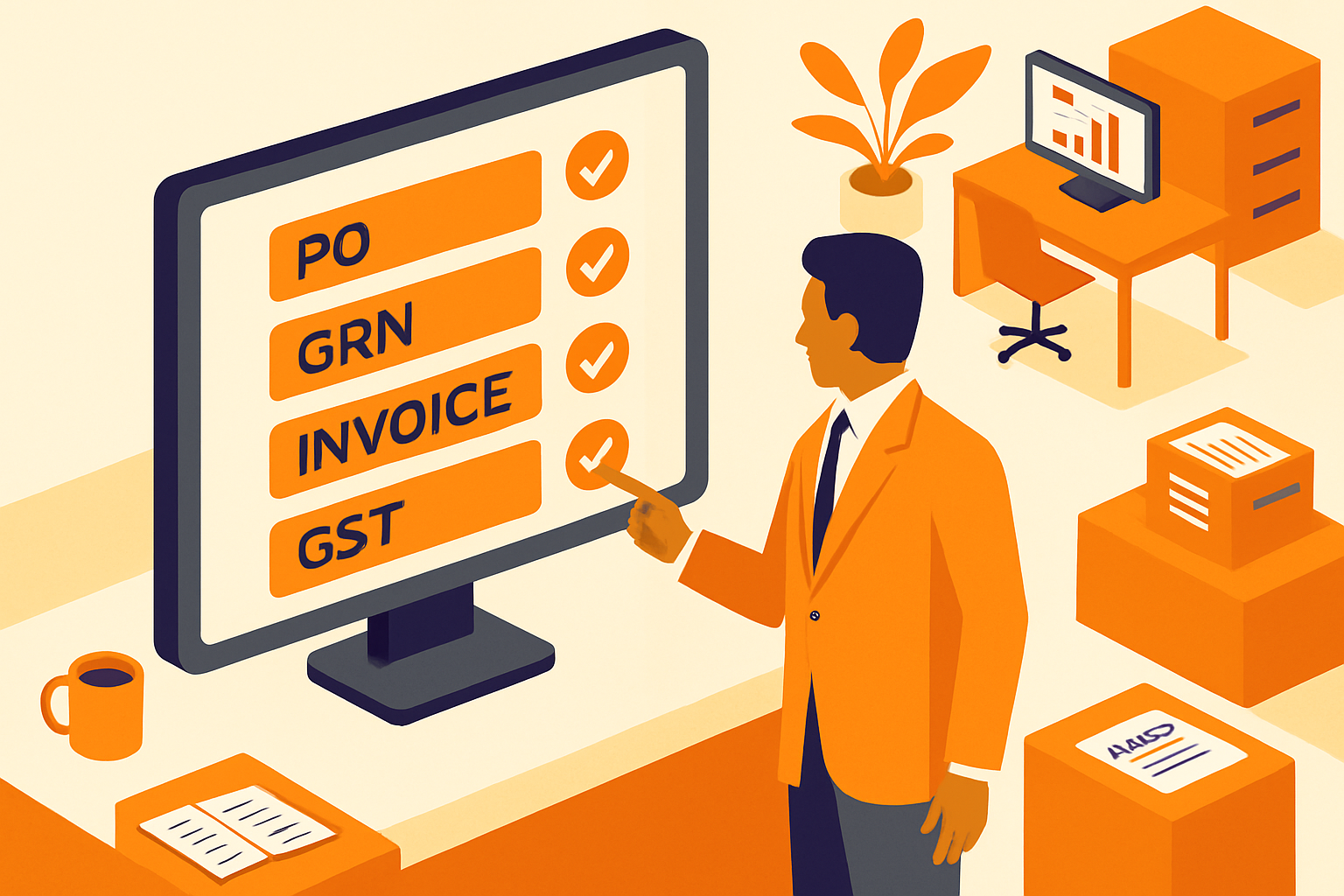
- Invoice ingestion and matching. The invoice is matched dynamically across 2, 3, 4, or even 5 points — PO, GRN, quality control sign-off, gate entry, and challan — depending on the transaction type. This is particularly powerful in manufacturing, where a raw-material invoice might need to pass through QC before payment is even released (ValueDX).
- Compliance checks. GSTIN validity, e-invoice IRN verification, TDS section mapping, and threshold tracking happen automatically, before the invoice reaches an approver's desk.
- Approval and payment. Only invoices that clear every match and every compliance check reach the approval queue — meaning approvers are looking at genuinely exception-worthy items, not routine invoices buried in noise.
The compounding effect of this workflow shows up in exception rates. Manually processed invoices in India carry an exception rate of up to 14% due to data mismatches or missing information (Binary Semantics) — meaning 1 in every 7 invoices needs someone to stop, investigate, and manually resolve it. At 4,000 invoices a month, that's 560 invoices requiring manual intervention. Automated matching, by tightening the PO-GRN-invoice link at the source, collapses this dramatically because most mismatches never make it past receipt capture.
Is capturing early-payment discounts truly worth the P2P automation effort?
Yes, and this is one of the more underappreciated returns of P2P automation. Highly automated systems typically capture 85–95% of available early-payment discounts, directly boosting cost savings and improving vendor relationships (Rillion).
This links directly to two things CFOs already track closely: cash flow visibility and working capital. P2P automation is the operational engine that feeds those dashboards with clean, real-time payables data instead of a month-end dump from three different systems.
How does P2P automation change what the CFO actually does all day?
Automated P2P gives CFOs real-time visibility into financial commitments, liabilities, and approval statuses — not a static report generated after the fact, but a live view of what the company owes, to whom, and when (Artsyl). This changes three things concretely:
- Cash flow forecasting stops being guesswork. Instead of estimating payables based on last month's pattern, you see committed spend the moment a PO is raised, not when the invoice finally clears three approval layers.
- Vendor negotiations improve. When payment dates are predictable and TDS deductions are correct on the first attempt, vendors stop padding lead times or pricing in "delay risk" — a real, if unquantified, cost that fragmented AP processes impose on mid-sized buyers.
- Audit prep stops being a fire drill. Every match, every approval, every TDS calculation carries a timestamped digital trail. When your statutory auditor or GST officer asks for supporting documentation on a sample of 50 transactions, you pull it in minutes, not days.
This shift — from administrative firefighting to strategic oversight — means the goal isn't more dashboards, it's fewer manual reconciliation tasks eating the hours that should go into forecasting and vendor strategy.
Why should CFOs treat GST reconciliation as a working capital lever, not just a compliance chore?
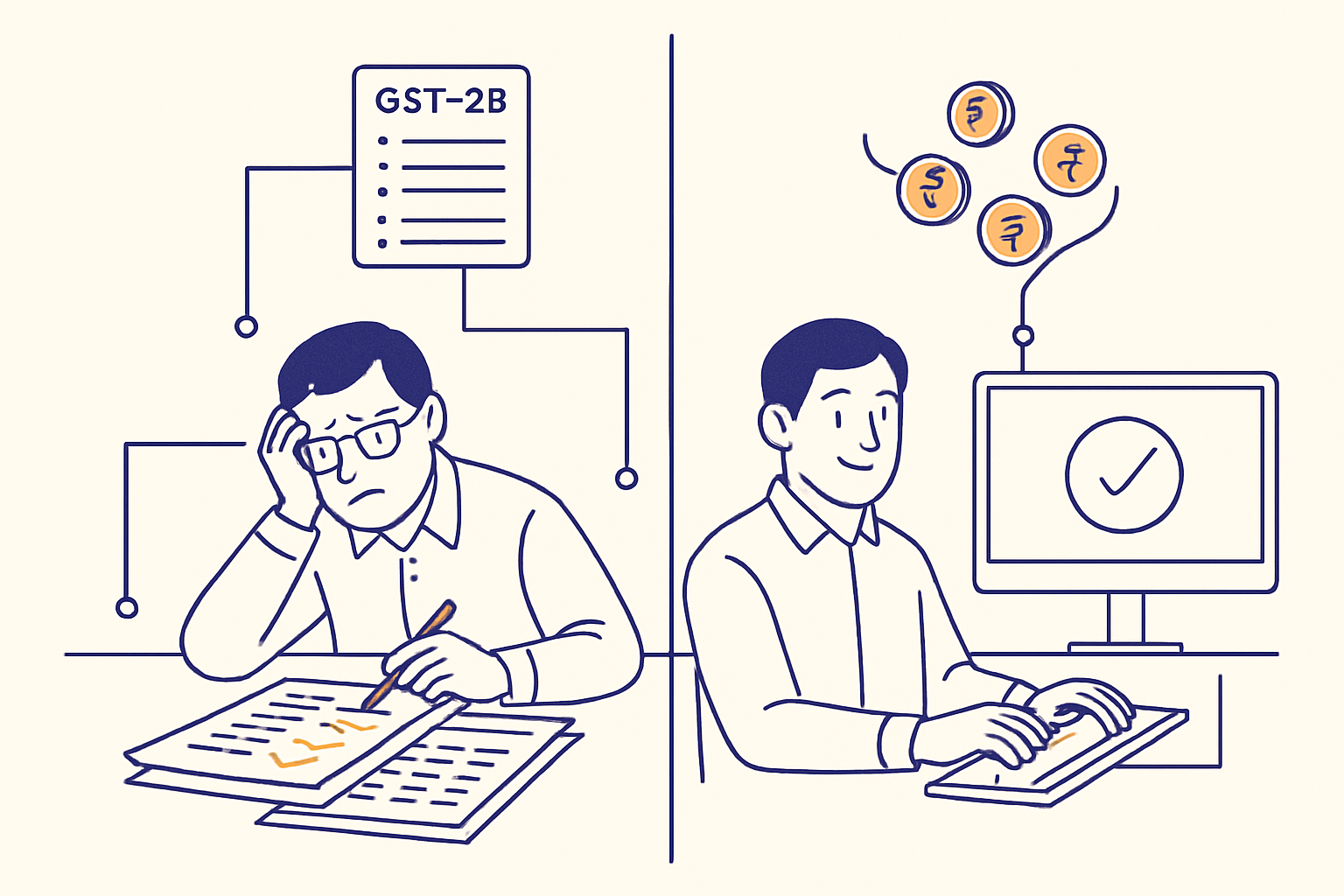
Most finance teams still treat GSTR-2B reconciliation as something the compliance team does once a month, disconnected from AP. That's backwards. Every rupee of ITC stuck in mismatch status is a rupee of working capital sitting idle — money you've already paid out to a vendor as GST but can't yet claim back against your output liability.
Automated reconciliation flips the sequence: instead of discovering mismatches during the monthly GST return filing, the system flags a mismatch the moment a vendor's invoice appears (or doesn't appear) on GSTR-2B, giving AP time to chase the vendor for correction before the credit window closes (Binary Semantics). At scale, the economics are national in size: full-scale e-invoicing adoption could unlock roughly ₹32,035.71 crore in annual economic value across India, saving the average business approximately ₹1.09 crore a year (Avalara). India already leads globally on this front, with over 80% of invoices received and 70% issued electronically (Avalara) — the infrastructure is there; the gap is in how well individual companies exploit it internally.
If your MIS reports still can't answer "how much ITC is currently stuck in mismatch" without a manual pull from three systems, that's a structural gap where the reporting layer is only as good as the transactional data feeding it, and P2P is one of the biggest transactional feeds a mid-sized company has.
What's a realistic adoption path for P2P automation for a mid-sized Indian company?
Full automation overnight is neither realistic nor necessary. A survey from November 2023 found 84% of Indian businesses had already partially automated supplier payments, with 39% at full automation (Economic Times) — meaning most companies are somewhere in the middle, and that's a perfectly workable starting point. A pragmatic sequence for a mid-sized company:
- Fix vendor master data first. Before automating anything, clean PAN, GSTIN, bank details, and TDS section mapping for your top 100 vendors by spend — this alone eliminates a large share of downstream exceptions.
- Mandate PO coverage for indirect spend. Stop allowing AMC, consulting, and logistics purchases without a PO. This is a policy change, not a technology one, and it should happen before you automate matching.
- Automate 3-way matching for your top spend categories. Start with raw materials or high-volume services where GRN and invoice data are already digital.
- Layer in GSTR-2B reconciliation automation. This delivers working capital returns fast and is relatively self-contained from the rest of the P2P stack.
- Extend to full 4/5-way matching and TDS automation once the first three steps are stable across your major plants or business units.
This isn't a one-quarter project. But each step delivers standalone value, which matters for mid-sized companies that can't justify a big-bang ERP overhaul the way a large enterprise might. P2P is usually the single largest source of Excel-based reconciliation work in a mid-sized finance team, and it's the first place that pain becomes visible to the CFO.
How can BiPivot help with P2P automation in India?
BiPivot works with mid-sized Indian finance teams to map their actual P2P document flow — POs, GRNs, challans, service entry sheets — against GST and TDS compliance checkpoints, then design automation that fits their existing ERP setup rather than forcing a rip-and-replace. If you're evaluating where P2P automation would return the most working capital fastest, bipivot.com is a good place to start that conversation.